
Article
Receptionist Onboarding: Training New Staff for Success
By Raid Contractor Marketing · · 6 min read
H2: How to Build a Receptionist Onboarding Plan That Actually Sticks
A receptionist onboarding plan fails when it relies on memory instead of a system. Contractors who skip structured training lose leads to missed calls and mixed-up messages. The fix is a written, repeatable process that any new hire can follow from day one.
Start with a Receptionist Handover Document
A receptionist handover document captures everything the new hire needs before they touch a phone line. This includes login credentials, call transfer lists, emergency contacts, and your service area boundaries. Without this document, training stalls while the receptionist hunts for basic answers.
Build the handover document before the first day. Include your top five call scenarios, the exact script for each, and the correct way to log a lead. Store it in a shared drive so updates reach everyone instantly. A receptionist who finds answers fast answers customers faster.
Use System Training for Teams That Mirrors Real Calls
System training for teams works best when it simulates real interactions. Have the new receptionist practice answering live calls with a coach listening in. This reveals gaps in their script delivery and phone navigation before they handle real customers.
Schedule training in short blocks across the first week. A 30-minute session on call logging, followed by a 15-minute role-play, beats one four-hour lecture. This spacing helps retention and lets the receptionist absorb one skill at a time.
Make AI Receptionist Onboarding a Team Effort
AI receptionist onboarding is not just the owner's job. Involve your top technician, your office manager, and a senior receptionist in the training plan. Each person owns one part of the process, from service-area questions to after-hours call handling.
Assign a mentor for the first two weeks. That mentor reviews every logged call and gives feedback daily. This hands-on oversight catches small errors before they become bad customer experiences.
Create Staff Training Materials That Stay Current
Staff training materials go stale fast if no one owns them. Assign one person to review the training guide monthly and update it with new scripts, pricing changes, or service updates. A quarterly audit keeps the material accurate and useful.
Store all materials in one place, like a shared Google Drive folder. Use checklists for daily tasks, call scripts, and escalation steps. When a receptionist leaves, the next hire gets the same quality training without starting from scratch.
Measure What Matters After Onboarding
Track three numbers in the first 30 days: call answer time, missed call rate, and lead conversion from phone calls. These metrics show whether the training worked or where the process needs adjustment. Share the results with the receptionist weekly so they see their progress.
A structured onboarding plan turns a risky hire into a reliable brand ambassador. Contractors who invest in this process protect their reputation and their revenue, one answered call at a time.
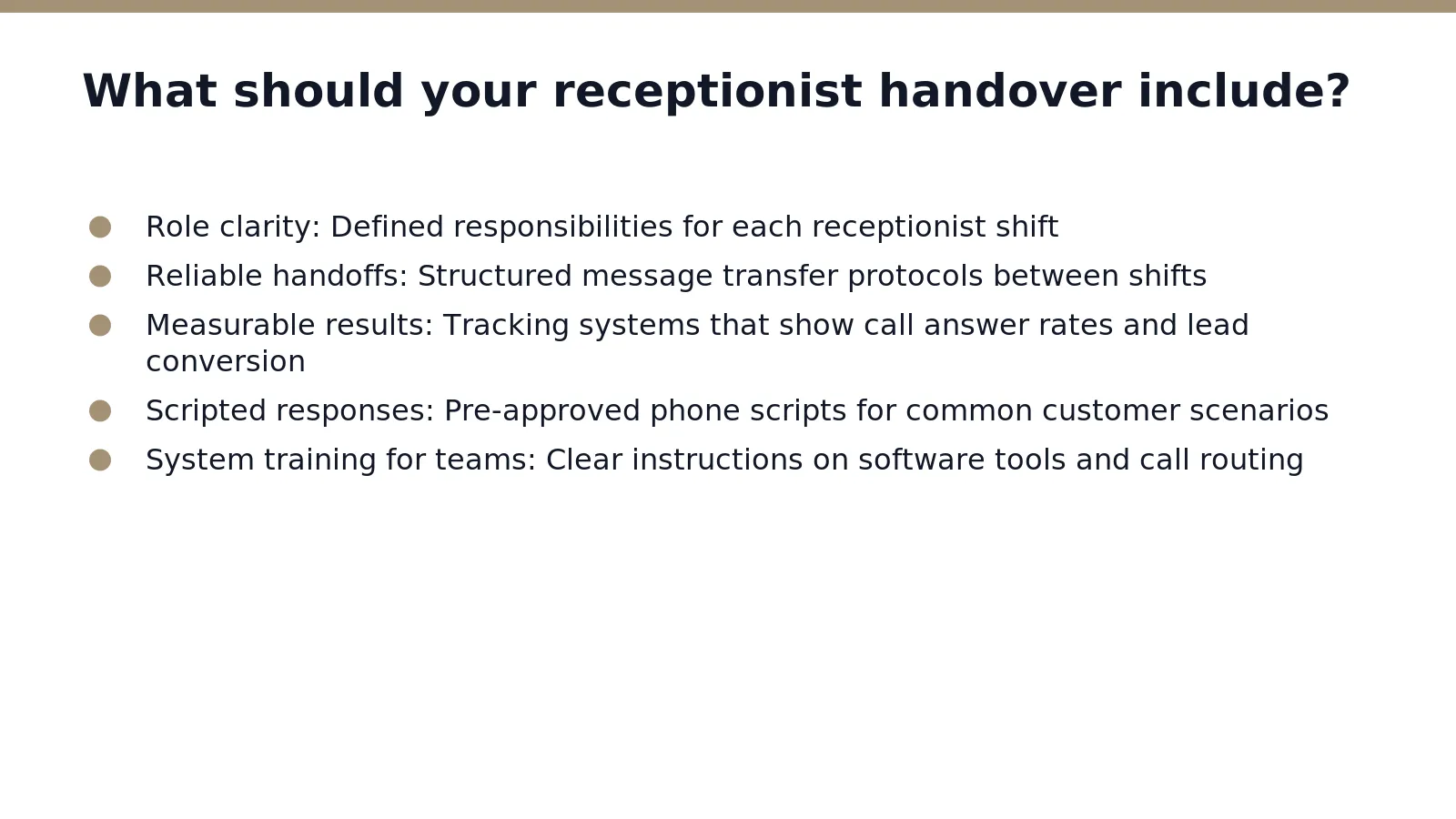
What should your receptionist handover include?
A proper receptionist handover requires role clarity, reliable handoffs, and measurable results so every receptionist delivers consistently. Without these three elements, contractors risk missed calls, lost leads, and inconsistent customer experiences across shifts.
What phone scripts should a new receptionist learn?
New receptionists need phone scripts that gain new clients by making emotional connections with prospective customers. The training should teach receptionists to ask questions that determine which services a client needs, describe services before quoting prices, and confidently ask for the appointment. These scripts turn every inbound call into a booked job rather than a missed opportunity.
How does Raid Contractor Marketing support receptionist handovers?
Raid Contractor Marketing ensures every call is answered and every lead is handled, turning searches into potential jobs. The approach eliminates the guesswork from shift changes and message transfers.
A complete handover package includes:
- Role clarity: Defined responsibilities for each receptionist shift
- Reliable handoffs: Structured message transfer protocols between shifts
- Measurable results: Tracking systems that show call answer rates and lead conversion
- Scripted responses: Pre-approved phone scripts for common customer scenarios
- System training for teams: Clear instructions on software tools and call routing
Staff training materials should cover these elements in a single accessible document. System training for teams ensures every receptionist follows the same process regardless of who answers the phone. AI receptionist onboarding adds a backup layer that captures calls when human receptionists are unavailable, preventing lead loss during handover gaps.
How to Train Your Team on the New AI Receptionist
A smooth receptionist handover determines whether your new AI receptionist books jobs or drops calls in the first week. Contractors who skip a structured rollout lose incoming lead volume while staff fumble with unfamiliar tools. The fix is a deliberate system training for teams that covers both the technology and the humans using it.
Build a structured receptionist onboarding plan
Receptionist onboarding starts before your AI receptionist ever answers a call. Create a written schedule that maps day one through day fourteen, with specific milestones for every team member. The ai receptionist onboarding process works best when you assign one point person, typically the office manager or lead dispatcher, to own the rollout. That person tests the system, documents quirks, and serves as the internal expert your crew can ask.
Your staff training materials should include three core documents: a quick-reference script for common calls, a troubleshooting cheat sheet for the AI dashboard, and a list of escalation paths when a caller needs a human. These materials give your team something to hold while they learn, which cuts training time dramatically. New hires absorb information faster when they can see the answer instead of guessing.
Use a phased approach for system training for teams
Do not train everyone on the same day. Phase your system training for teams across one week so you maintain coverage at the front desk while people learn. Start with your most tech-comfortable employee, let them master the dashboard, then have them help train the rest of the crew. This peer-led model builds confidence and creates internal ownership of the new tool.
Each training session should include hands-on practice with real scenarios. Have your team role-play a burst water heater call, a roof leak emergency, and a routine maintenance booking. These drills reveal gaps in the AI's responses and give your staff practice correcting the system. Track every mistake during the first two weeks and review them in a short daily huddle to refine your approach.
Create a receptionist handover that covers every shift
A proper receptionist handover between your AI system and your human staff prevents missed messages and double-booked jobs. Document exactly what happens when the AI transfers a caller to a live team member, including what information travels with that call. Your team needs to know what the AI already collected, like the customer's name, service needed, and preferred callback time. They never ask for the same details twice.
Build a simple shift-change checklist that your staff completes at the end of every day. The checklist confirms all voicemails are transcribed, all call summaries are reviewed, and all follow-up tasks are assigned. This daily ritual turns your receptionist onboarding from a one-time event into an ongoing habit that protects your lead pipeline.
Refresh staff training materials as your system improves
Your staff training materials are not a one-and-done document. Review them monthly during your first quarter with the AI receptionist, then quarterly after that. Your AI system learns from every call, so your team's knowledge needs to keep pace. When you notice the AI handling a new type of inquiry well, add that example to your training guide. When a call stumps the system, document the fix and update your team.
The contractors who see the fastest results treat ai receptionist onboarding as a continuous improvement loop, not a single training session. They measure success by tracking missed calls, booked appointments, and staff confidence levels. Within 30 days, most teams report their AI receptionist handles routine inquiries without any human backup, freeing the front desk to focus on high-value work.
Conclusion
In closing, seamless onboarding and training transform your AI receptionist from a tool into a trusted team member that handles your contractor business around the clock. When your system understands your service areas, pricing, and scheduling nuances, it answers calls with the professionalism your customers expect, turning inquiries into booked jobs while your team focuses on the work that matters. That's how Raid Contractor Marketing ensures every lead gets the attention it deserves.