
Article
Schema Markup for Contractors: Boost Local SEO
By Raid Contractor Marketing · · 4 min read

Schema markup for service businesses uses Schema.org/Service structured data to define offerings like roofing, plumbing, HVAC, or electrical work, including properties such as areaServed and aggregateRating. Contractors typically add LocalBusiness schema first, then layer Service markup on top, helping search engines and AI tools match local queries to the correct trade and service area accurately.
What is schema markup for contractors?
Schema markup for contractors is structured data added to a website's HTML that helps search engines understand a contractor's services and location. This code acts as a direct bridge between a business website and search engine crawlers, translating business details into machine-readable language. Search engines use this data to display rich snippets in results, showing ratings, prices, or images directly on the search page. For a roofing or HVAC contractor, that difference means a searcher sees a star rating and service list before clicking any link.
How does structured data for services help contractors?
Structured data for services uses a specific vocabulary called local business schema to describe what a contractor offers. Google's schema.org defines the Service type, which includes an areaServed property for service zones and an aggregateRating property for overall ratings based on reviews. When a contractor marks up a page with this code, Google knows the business serves a defined region and holds a strong rating across verified reviews.
What are the most useful schema types for a trade business?
Three types deliver the most impact for contractors:
- Service schema – Describes each specific offering, such as HVAC repair or roof replacement, with properties for service area and provider.
- Local business schema – Identifies the business as a physical or service-area operation with hours, address, and phone number.
- FAQ schema for contractors – Structures common customer questions into expandable search results, answering queries like "How much does a new furnace cost?" directly on the results page.
Raid Contractor Marketing builds websites with these schema types built in, along with AI automations, SEO, paid advertising, and a 24/7 AI receptionist for HVAC, roofing, plumbing, and electrical trades. The goal is search results that book jobs, not just visits.
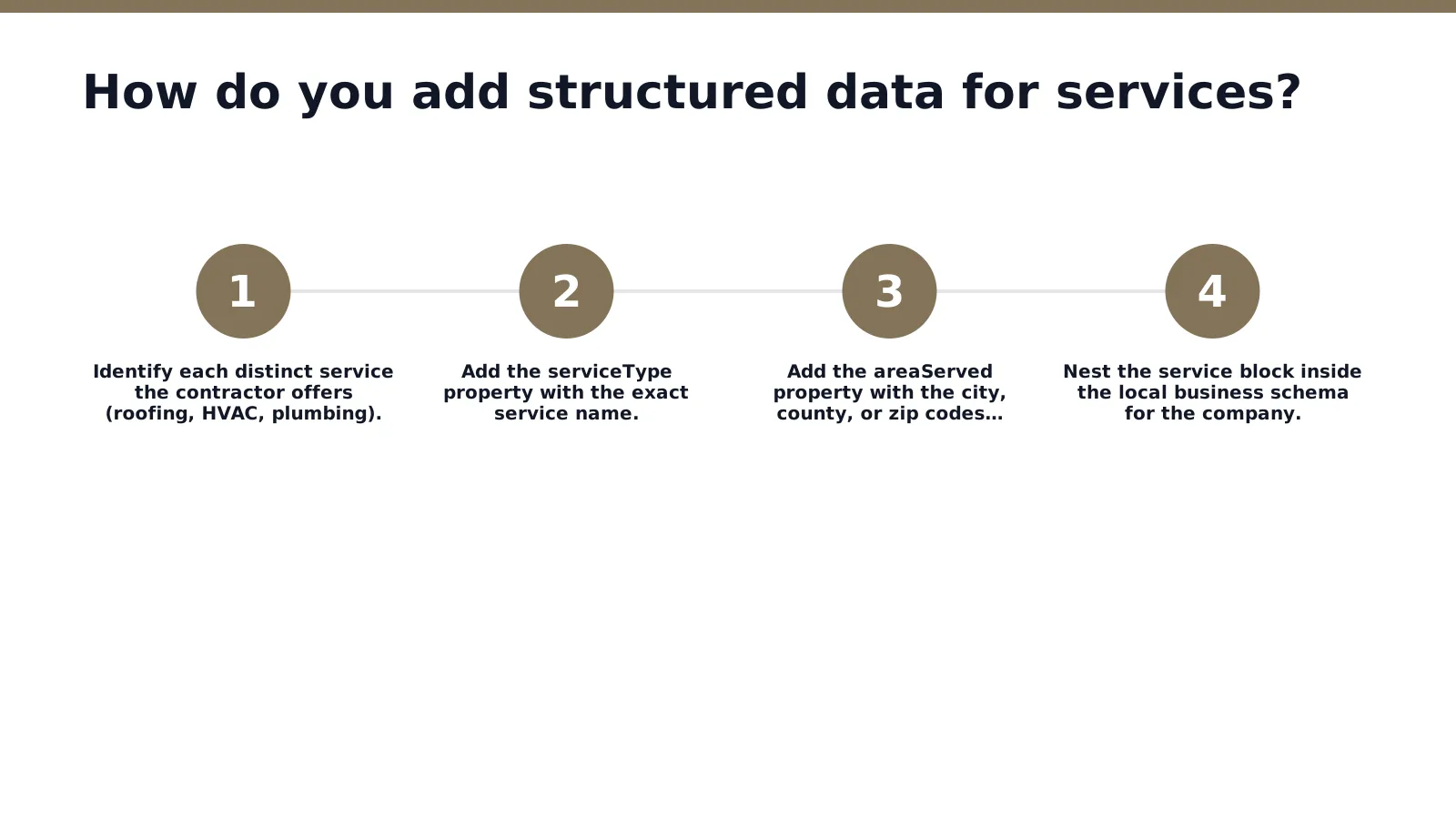
How do you add structured data for services?
Adding structured data for services requires embedding a specific code block into a website's HTML. The Service schema type from Schema.org defines the framework. This markup tells search engines exactly what a business offers, from roofing repairs to HVAC maintenance.
What properties belong in service schema?
The service schema requires several key properties to function correctly. The serviceType property describes the specific offering, such as "emergency plumbing" or "residential electrical work." The areaServed property defines the geographic territory where the contractor provides that service. Without areaServed, search engines cannot match the service to local search queries.
- Identify each distinct service the contractor offers (roofing, HVAC, plumbing).
- Add the
serviceTypeproperty with the exact service name. - Add the
areaServedproperty with the city, county, or zip codes covered. - Nest the service block inside the local business schema for the company.
Raid Contractor Marketing builds these structured data implementations for home-services contractors. The approach ensures every service page carries the correct markup, turning searches into potential jobs.

What mistakes hurt local business schema results?
Several common errors undermine local business schema performance. The most frequent mistake involves skipping the service layer entirely. Most SEOs optimize the business entity first, then stop before adding structured data for services. This leaves a gap in the search engine's understanding of what a contractor actually offers.
Why does skipping service schema cause problems?
Google's structured data features do not include a dedicated "Service" rich result. The search engine focuses on product schema markup for enhanced display. Without service schema, a contractor's website lacks the machine-readable signals that tell Google which specific trades the business performs. A roofing company might have perfect business schema but zero markup for "roof repair" or "gutter installation."
What formatting errors hurt opening hours data?
Incorrect formatting of opening hours creates another common failure. The local business schema specification requires opening hours as a weekly time range. The format must start with days, then list times per day. A contractor entering "Monday-Friday 8am-5pm" without the proper day abbreviation and time format causes the structured data to fail validation. Search engines cannot parse the information, and the rich snippet never appears.
Raid Contractor Marketing approaches schema as a complete system. The process launches with proper markup, tracks results, and keeps tuning so the marketing investment keeps paying for itself.
Conclusion
In closing, schema markup transforms how search engines understand your service business, directly connecting you with customers actively seeking your expertise. By implementing the right structured data, you ensure your business information displays accurately across search results and maps, building trust and visibility where it matters most. For home-services contractors, this technical foundation works alongside strong websites, SEO, and responsive customer service to turn online searches into real jobs and steady growth.